

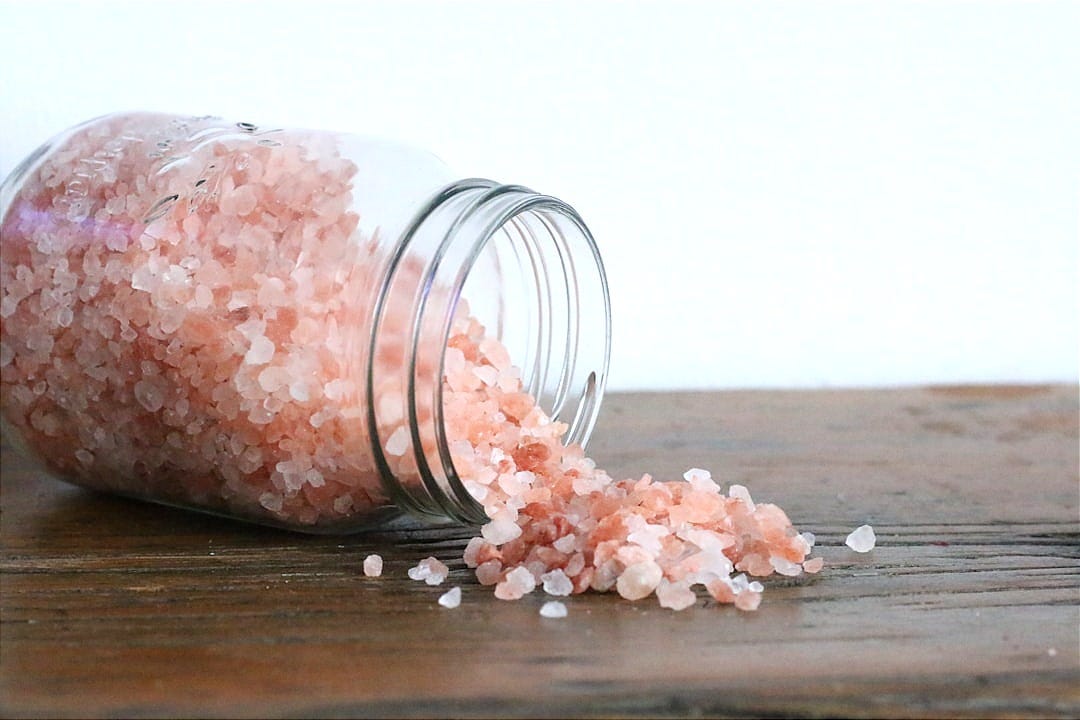
Table salt, sea salt, and Himalayan salt: Which is best?
Salt gets a lot of attention in the wellness world, with plenty of opinions about whether we need more or less. In medical nutrition therapy, sodium recommendations are adjusted for certain conditions. However, for most healthy people, the body is generally able to regulate normal variations in salt intake.
Then there is the debate over which type of salt is healthiest.
Sea salt and Himalayan pink salt are often described as more natural and nutritious, while regular table salt is usually presented as the less appealing option.
All three are mostly sodium chloride. Sea salt and Himalayan salt contain trace minerals and may offer a different flavor or texture. Iodized table salt provides a meaningful source of iodine. There are differences between them, but they may not be the differences you have heard about.
Are sea salt and Himalayan salt healthier?
Sea salt and Himalayan salt contain small amounts of minerals that are mostly removed when table salt is refined. Depending on the salt, these may include magnesium, potassium, calcium, iron, and other trace minerals. Iron-containing compounds contribute to the pink color of Himalayan salt.
You may see claims that these salts contain 10, 50, or even 100 times more of certain minerals than table salt. That can technically be true because refined table salt contains almost none of them. However, when a salt contains only a trace amount of a mineral, such as magnesium, even 100 times more is still not very much!
The amount of minerals you receive from a normal serving of salt is tiny compared with what you need each day. You would consume far too much sodium before getting a meaningful amount of magnesium or potassium from salt.¹ Sea salt and Himalayan salt contain trace minerals, but they are not useful mineral supplements.
Flavor may be the real advantage
The main reason to choose a specialty salt is usually its flavor or texture. Large flakes create bursts of saltiness on the surface of food, and some salts have subtle flavor differences that people enjoy.
A finishing salt works well when the texture can be noticed, such as on:
Roasted vegetables
Sliced tomatoes
Avocado toast
Salads
Table salt has practical advantages too. The smaller crystals dissolve easily, spread evenly through food, and are easier to measure consistently in baking. The sodium content is similar when salts are compared by weight, although the amount may differ by the teaspoon because larger, irregular crystals leave more empty space in the measuring spoon.
The advantage of iodized salt
Iodine is where regular iodized table salt may have a nutritional advantage. Your thyroid needs iodine to make thyroid hormones, and iodine is also important for fetal and infant brain development.
Adults need about 150 micrograms of iodine per day. Needs increase to 220 micrograms during pregnancy and 290 micrograms while breastfeeding. A quarter teaspoon of iodized table salt provides approximately 78 micrograms, or about half of the adult recommendation.²
Salt iodization began in the United States in the 1920s to help reduce iodine deficiency. Adding iodine to salt is still voluntary in the United States, so table salt is not automatically iodized. Check the label. Most Himalayan, flaky, and specialty sea salts are not iodized unless the package specifically says they are.²
Iodine is also found in foods such as dairy products, eggs, seafood, and some types of seaweed, although the amount in food can vary. People who eat little or none of these foods and use only noniodized salt have more reason to pay attention to their iodine intake. During pregnancy, it is also worth checking the prenatal vitamin label rather than assuming iodine is included.²
What about microplastics?
Microplastics have been detected in sea salt, lake salt, rock salt, Himalayan salt, and regular table salt. Some studies have found substantially more microplastics in sea salt than in refined or mined salts.
One Korean study found median levels of 1.19 particles per gram in sea salt compared with 0.11 particles per gram in refined salt. The researchers suggested that additional refining steps may remove some contamination.³ An earlier study of 15 salt brands sold in China also found higher levels in sea salt. Sea salt contained 550–681 particles per kilogram, compared with 43–364 in lake salt and 7–204 in rock or well salt.⁴
However, this pattern has not appeared in every study. An Australian study of seven commercial salts found relatively low levels in sea salt, iodized salt, and fine Himalayan salt. Regular table salt and coarse Himalayan salt contained more. The researchers noted that processing and packaging could contribute to contamination.⁵
The results vary widely by location, brand, production method, processing, and packaging. Refined table salt may contain fewer microplastics in some cases, but it is not consistently the lowest. The current evidence does not identify one type or brand of salt as the clear best choice for avoiding microplastics.
Salt is also only one possible source of microplastic exposure, and we generally consume much less salt than foods and beverages such as drinking water. This probably does not need to become another stressful grocery-store decision.
So which salt should you use?
Use the salt you enjoy and that works for your cooking. Iodized table salt is inexpensive, easy to measure, and can help provide iodine. Whether that matters for you depends on the rest of your diet, your life stage, and your medical history. Sea salt, Himalayan salt, and flaky salts are reasonable choices when you prefer their flavor or texture.
Keeping two types of salt in the kitchen can work well:
Iodized salt for everyday cooking
A flaky or coarse salt for finishing foods
If you are looking to boost your intake of potassium or magnesium, adding more salt to your food is not the answer.
The FDA recommends that most adults consume less than 2,300 milligrams of sodium per day, although individual needs vary. One teaspoon of table salt contains roughly that amount.⁶
For most people, the color or origin of the salt is not the most important part of the diet. Use what you like. Pay attention to where your iodine is coming from. Consider your total sodium intake when it is relevant to your health.
This is one nutrition decision where you probably do not need to sweat the small stuff.
About the author
Hi, I’m Courtney, a Registered Dietitian Nutritionist.
As a fellow human who is often busy and running on fumes, my goal is to help people simplify nutrition and wellness. Through Nutrition for Tired People, I aim to cut through misinformation and share what I think deserves your attention—and what doesn’t.
I also offer one-on-one nutrition support for people who want more individualized guidance.
If you enjoyed this, please consider subscribing. I don’t post often… mostly because I’m feeling tired too!
Further reading
Fayet-Moore F, et al. An analysis of the mineral composition of pink salt available in Australia. 2020.
https://pmc.ncbi.nlm.nih.gov/articles/PMC7603209/National Institutes of Health, Office of Dietary Supplements. Iodine: Fact Sheet for Health Professionals. Updated 2024.
https://ods.od.nih.gov/factsheets/Iodine-HealthProfessional/Pham DT, et al. Analysis of microplastics in various foods and assessment of aggregate human exposure via food consumption in Korea. 2023.
https://pubmed.ncbi.nlm.nih.gov/36709032/Yang D, et al. Microplastic pollution in table salts from China. 2015.
https://pubmed.ncbi.nlm.nih.gov/26486565/Kuttykattil A, et al. Consuming microplastics? Investigation of commercial salts as a source of microplastics in diet. 2023.
https://pmc.ncbi.nlm.nih.gov/articles/PMC9813175/U.S. Food and Drug Administration. Sodium in Your Diet. Updated 2024.
https://www.fda.gov/food/nutrition-education-resources-materials/sodium-your-diet